Radon Education
An overview of what radon is, why it matters for your health, and how it enters Prairie homes like the ones in Brandon, MB.
Radon is a naturally occurring radioactive gas produced by the breakdown of uranium in soil and rock. It's present in the ground almost everywhere, in small amounts, but it becomes a health concern when it seeps into enclosed spaces like homes and buildings and accumulates to higher concentrations than it would ever reach outdoors.
Radon is colorless, odorless, and tasteless. There is no way to detect it with your senses. Testing with a proper device is the only reliable way to know your indoor radon level.

According to Health Canada, radon exposure is the second leading cause of lung cancer after smoking, and the leading cause of lung cancer among non-smokers. When you breathe in radon gas, it decays into radioactive particles that can become trapped in your lungs, where they continue to release radiation and damage lung tissue over time.
The health risk depends on both the concentration of radon in your home and the length of time you're exposed to it, which is why testing over a longer period (long-term or continuous monitoring) tends to give a more representative picture of your actual risk than a very short snapshot test.
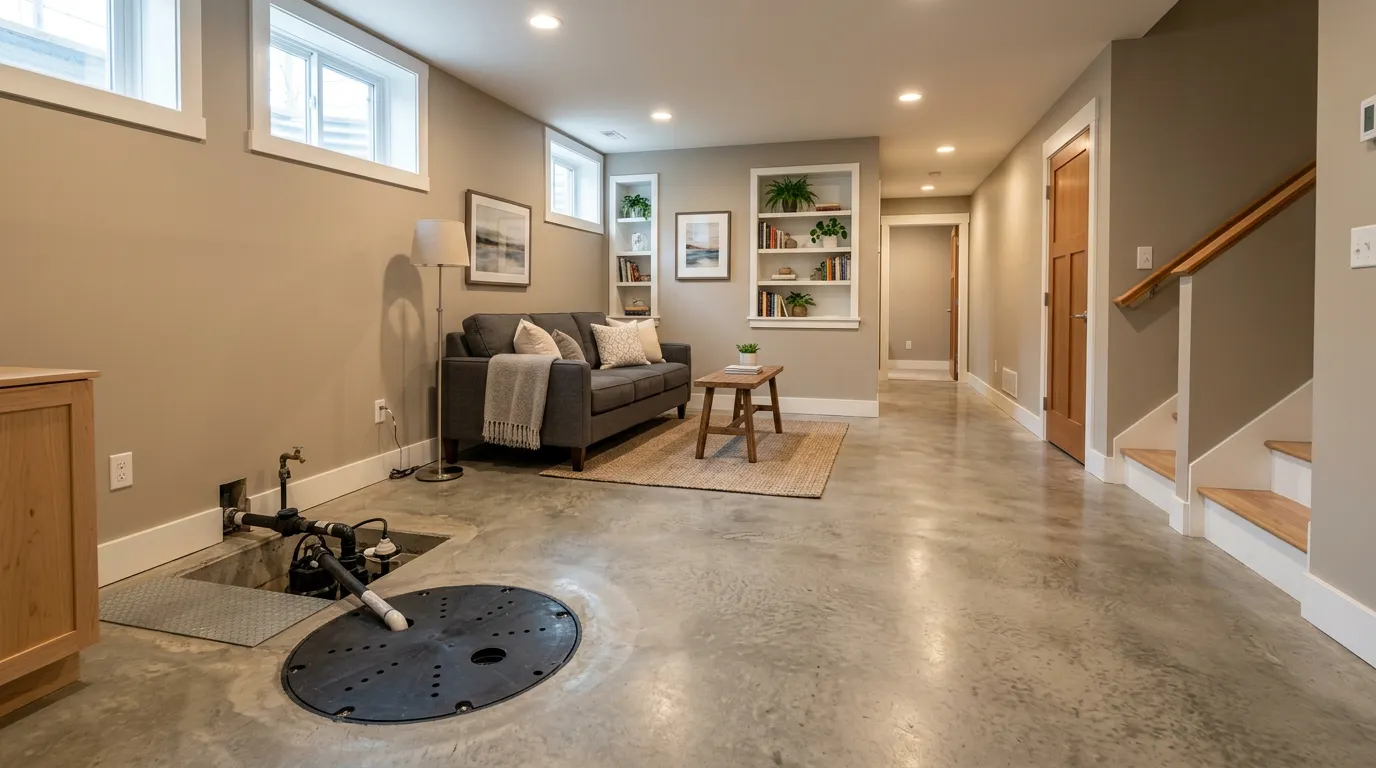
Radon gas moves up from the soil and enters buildings through any point of contact with the ground: cracks in foundation slabs and walls, gaps around pipes and wiring penetrations, sump pits, and even through some porous concrete itself. Once inside, radon can become trapped and build up to levels much higher than outdoors, especially in basements and lowest lived-in levels.
Prairie homes, including many in Brandon and the surrounding Westman region, face a particular combination of factors: soil conditions in this part of Manitoba that tend toward higher radon potential, and a long heating season that keeps homes sealed tightly for much of the year to conserve heat. That combination of tighter building envelopes and regional soil profile is part of why Manitoba shows up in Health Canada's national data as a higher-than-average radon region.
Health Canada's cross-Canada radon surveys have found that Manitoba, along with other Prairie provinces, tends to report higher average indoor radon readings compared to the national picture. This doesn't mean every home in Brandon has an elevated level, since radon levels can vary significantly even between neighboring properties depending on foundation type, construction quality, and soil conditions directly beneath the building.
What it does mean is that Brandon homeowners have good reason to test rather than assume their home is fine simply because there are no visible symptoms of a problem. Radon can only be identified through proper testing.
Health Canada's guideline for indoor radon, sometimes called the action level, is 200 becquerels per cubic metre (Bq/m³) averaged over a full year. Testing can be done with a short-term device (2 to 7 days) for a quick initial read, or a long-term/continuous monitor (90 days or more) for a result that better reflects year-round exposure across different seasons and heating conditions.
If your result comes back at or above 200 Bq/m³, Health Canada recommends mitigation. The higher above that guideline your result is, the sooner mitigation is recommended.
Get a C-NRPP certified radon test and know your real number.
Call (431) 600-5330 Request a Free Estimate
Free, no-obligation estimate